


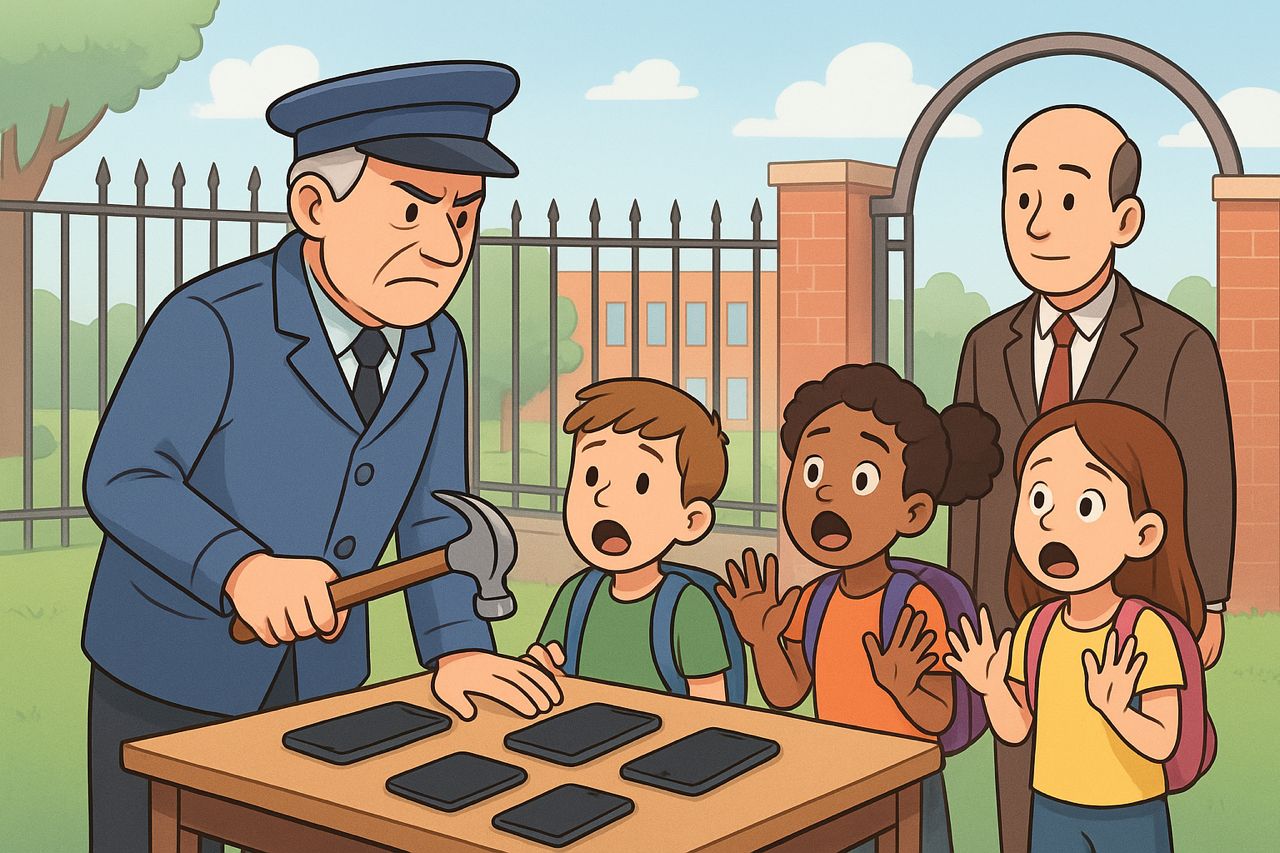
Recently, a viral video from Goma stirred a lot of debate and raised questions about how discipline should be administered in schools. The video shows a principal ordering the school gatekeeper to destroy students’ phones in front of them with a hammer, all because using or owning a phone is prohibited during school hours. The students, many of whom had expensive devices like iPhones 12 Pro or 13 Pro, scream in distress as their phones are destroyed. This dramatic scene has sparked both outrage and support, but the question remains: was this an effective way to handle the situation, or was it simply an act of destruction and humiliation?
While it’s clear that phone use during school hours can be a major distraction and interfere with students’ focus, such a public and extreme approach is troubling. As educators, we are tasked not only with enforcing rules but also with guiding our students towards understanding why those rules exist and how they contribute to a better learning environment. Using force, humiliation, or fear to enforce compliance may have short-term effects, but it is unlikely to create a lasting sense of respect or responsibility. Instead, it sends the message that problems are solved through punitive actions rather than reason and understanding.
This incident struck a personal chord with me, as it reminded me of a lesson I learned when I was a child a lesson about punishment, respect, and the consequences of humiliation.
As someone with a background in educational planning and administration, and who studied psychology as part of my program, I’ve learned a lot about the effects that different types of discipline can have on young minds. Through this scene in Goma, I couldn’t help but recall an experience from my own childhood that helped shape my views on discipline.
A Personal Reflection: Humiliation vs. Correction
When I was a little boy, I was generally a respectful child who followed my parents’ instructions. However, like many children, there were times when I would get distracted and forget to complete the tasks assigned to me. One of those moments happened when I was supposed to go fetch water, but I was too caught up playing soccer with my friends.
We lived in the village, and our family had an elder cousin staying with us at the time. She decided to teach me a lesson, and in her frustration, she took my ball and threw it into a WC hole not the modern kind, but the traditional one.
For her, this was a way to make me understand the importance of completing my chores before playing. But for me, it was more than just a lesson. It was deeply painful. I had saved for months to buy that ball, and to see it thrown away because I had failed to complete my chore hurt me more than I can describe. I didn’t understand at the time that her intent was to guide me; all I felt was a sense of loss and humiliation.
I reacted out of frustration and anger. In a moment of impulse, I threw her shirt into the same place where she had thrown my ball. Looking back, I know it wasn’t the right thing to do, but in that moment, I couldn’t see past the feeling of injustice. That experience stayed with me for a long time, and every time I think back to it, I remind myself, “You didn’t have to throw her shirt, man.”
This moment from my childhood serves as a perfect parallel to what happened in Goma. In both cases, the intent behind the action to teach a lesson was clouded by the method. My cousin wanted me to understand the importance of responsibility, but the way she went about it only created resentment. Similarly, the principal in Goma may have wanted to enforce the school rules, but destroying students’ phones publicly risks creating anger and frustration rather than encouraging a deeper understanding of the rules.
The Power of Education Over Punishment
In my years as an educator, I have come to understand that effective discipline is not about humiliation or harsh punishment. It is about guidance, understanding, and helping students reflect on their behavior. The goal should be to help them learn why rules exist and how adhering to them can help them succeed. Rather than making students fear authority, we should encourage them to respect it.
Of course, discipline is necessary, and rules should be enforced, but there are more constructive ways to do this than by resorting to extreme measures. In the case of the phones in Goma, an alternative approach could have been to confiscate the devices for a set period, with a clear explanation of why the policy is in place. Students could have been given the opportunity to reflect on their actions and understand the importance of staying focused during school hours. This would likely have had a far more positive impact on their behavior in the future.
In conclusion, while the principal in Goma may have thought they were teaching the students a lesson, what was actually communicated was a message of fear and humiliation. Effective discipline should never come at the cost of a student’s dignity. In fact, such extreme actions can be counterproductive, leading to a breakdown in trust and respect. True education is about guiding students to make better choices, not about punishing them for their mistakes.
We should always strive to be educators who help our students understand and learn from their actions, rather than simply punishing them for mistakes. After all, as I learned from my own experience, it’s not just about the lesson, but how it’s delivered.


Of course. Here is a summary of the analysis:
The principal’s action of destroying students’ phones with a hammer was a fundamentally flawed and ineffective method of discipline, primarily constituting an act of destruction and humiliation.
Key Reasons:
1. Illegal and Disproportionate: It involved the destruction of private property, a likely illegal act that imposed a severe financial penalty disproportionate to the offense.
2. Psychological Harm: The public shaming caused distress, humiliation, and resentment, damaging the student-teacher relationship.
3. Teaches the Wrong Lesson: It modeled that “might makes right” and that violence/destruction are acceptable solutions to problems, rather than teaching responsibility.
4. Short-Term Fix: While it may deter through fear, it doesn’t address the root causes of phone use or teach long-term digital citizenship.
While the goal of a phone-free learning environment is valid, effective discipline should be proportional (e.g., temporary confiscation), educational, respectful, and involve collaboration with parents—none of which were present in this act.