


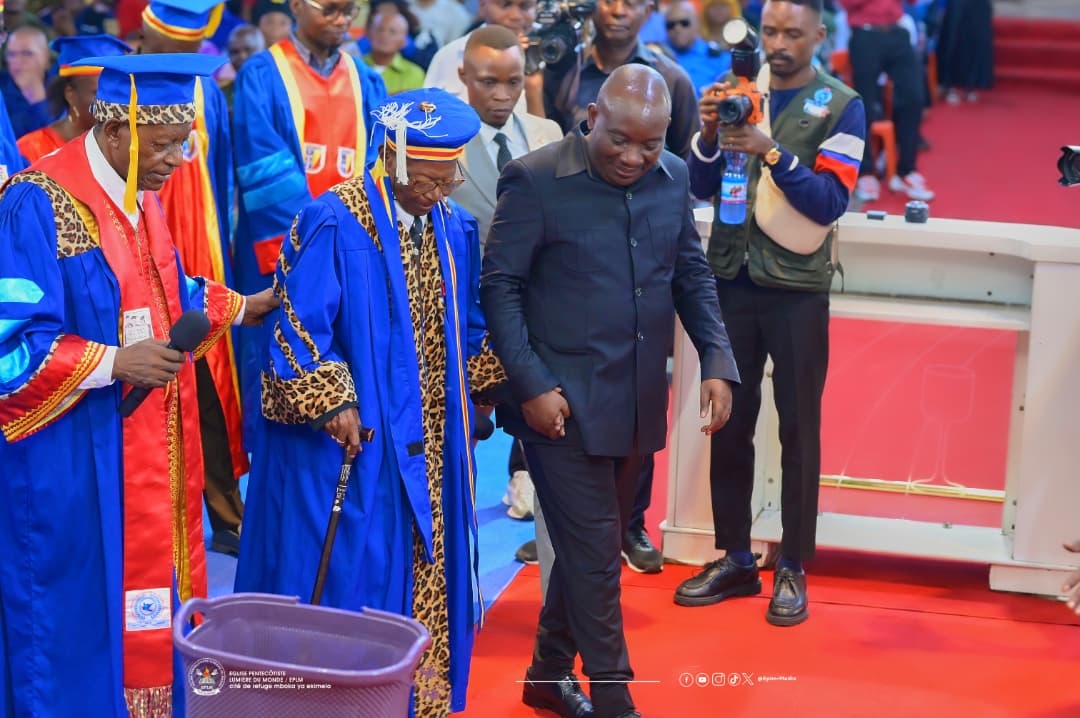
In a country marked by decades of armed conflict and social fragmentation, faith-based leadership continues to emerge as a powerful instrument for peacebuilding. This reality was highlighted on February 1, 2026, when the African Observatory for Positive Sanction (OASP) awarded Prophet Dr. Mulindwa Jules with the World Grand Peace Prize during a ceremony held in Kinshasa.
Rather than recognizing political or military action, the international organization cited the consistent use of faith, moral authority, and community mobilization as key tools in the promotion of peace and national cohesion. According to OASP, Prophet Mulindwa Jules has distinguished himself by translating spiritual teachings into concrete actions aimed at reconciliation and stability.
For several years, as violence persisted in eastern Democratic Republic of Congo and tensions affected the wider region, the founder of City of Refuge Church has maintained a message centered on peace, dialogue, and responsibility. Through sermons, public initiatives, and symbolic acts, he has encouraged citizens to prioritize unity over division and prayer over confrontation.
In its official statement, read during the ceremony, OASP described him as “a man of faith deeply attached to truth, even when that truth is uncomfortable,” emphasizing that faith, when responsibly exercised, can become a force for social transformation.
The organization highlighted several criteria behind its decision, including moral integrity, community leadership, respect for institutions, commitment to family values, and detachment from materialism. These elements, OASP noted, contribute to the credibility of religious leaders who seek to influence society beyond church walls.
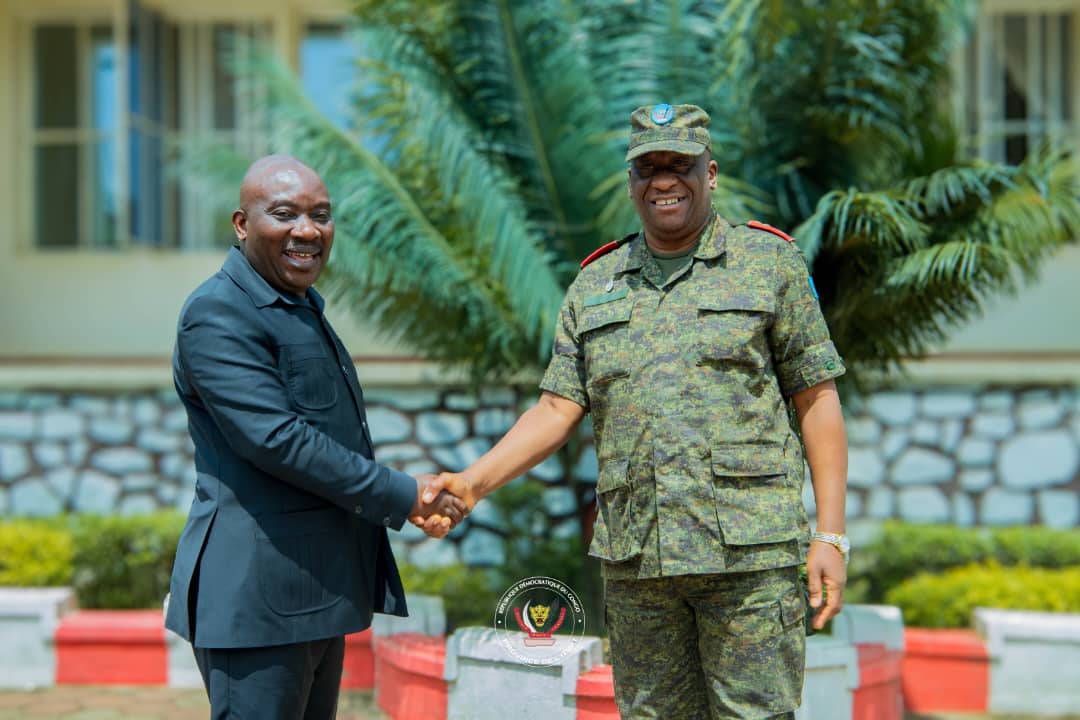
Concrete examples of this faith-driven engagement were also recalled during the event. In 2013, at a critical moment in the conflict in eastern Congo, Prophet Mulindwa Jules traveled to Bunagana and Mutaho to offer symbolic and material support to the national army, delivering supplies and a message of hope at a time when uncertainty prevailed. Similar initiatives, including peace marches and financial contributions in support of national efforts, have since reinforced his approach.
By honoring a religious leader for peace advocacy, OASP sent a broader message: faith, when aligned with ethical responsibility and civic commitment, can play a constructive role in conflict resolution and nation-building.
For many observers, the award reflects a growing recognition of non-state actors, particularly faith-based figures in shaping peace narratives in fragile contexts such as the Democratic Republic of Congo.

One thought on “DRC: Faith-Based Leadership Recognized as a Pathway to Peace”