



Communication has become one of the most important aspects of human life. It helps people connect, talk to each other, and cooperate in different sectors of life. However, communication would be impossible without the tool that makes it happen, which is language.
We have millions of languages in the world, including dialects, and without them the world and the people living in it would make little sense.
There is a saying: “If you want to walk fast, walk alone. But if you want to walk far, walk together.” That is why people endeavor to learn other people’s languages in order to communicate.
In the race of learning languages, English has become the most influential language, occupying the first position among the most spoken languages across the globe. This language has been chosen by many countries as the language of education because of the influence Britain had during the years of colonization.
English has now become the language that unifies people in different sectors such as business, politics, diplomacy, and many others. Because of that, everyone wants to know and speak this global language, as they believe that mastering it can open doors to opportunities.
For that reason, it is important to become fluent. However, fluency does not come as easily as we think. It comes through practice, effort, and the conscious realization that you need to do more in order to achieve it.
What Happened to Me When I Left Congo
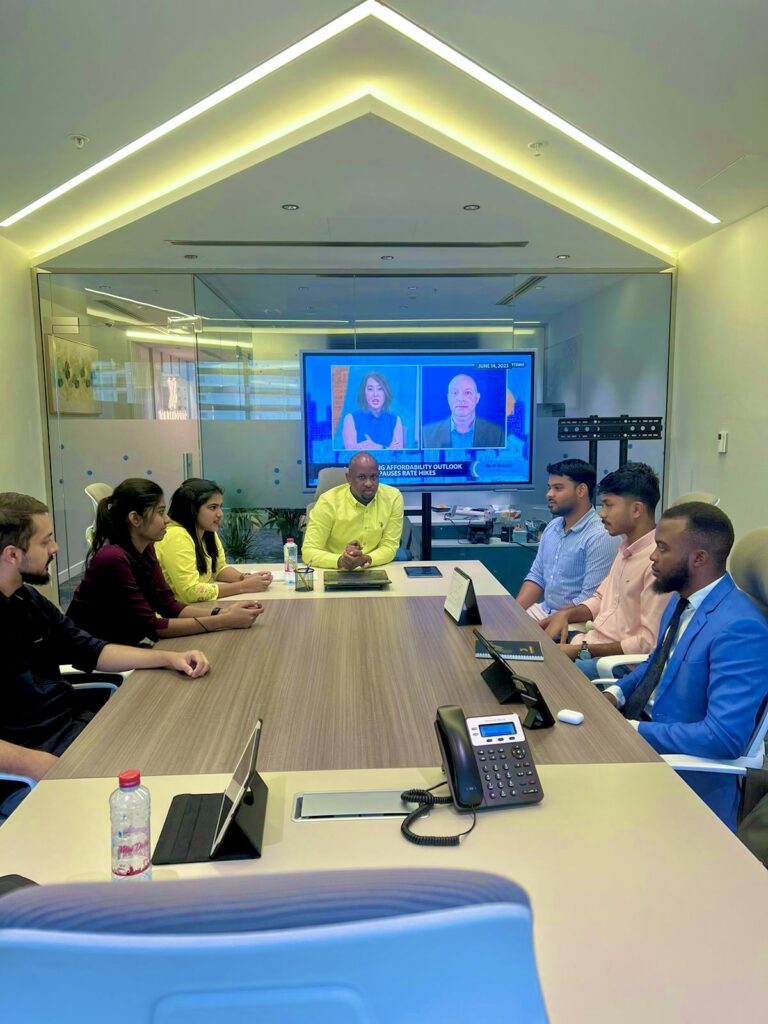
When I moved to the UAE from a French-speaking country (DRC) two years ago, my level of English was lower than I thought. From high school to university graduation, we learned English, but that was not enough to become good at it. As a matter of fact, students do not pay much attention when learning English because it matters less, as we do not use it in Congo at all.
However, moving to Dubai made me realize that English matters a lot. I started watching English content, but I could not understand most of what I heard.
By chance, I stumbled across Kenyan videos and realized that I could kind of understand their Swahili even though it was mixed with English. I became a fan of Kenyan content and started watching it every single day.
I kept watching because, from what I understood in Swahili, I was able to guess the meaning of some of the English words being used. It helped me expand my vocabulary.
Substitution as a Path to Fluency
To substitute is to use one thing in place of another because you lack what you really wanted. In a way, it is a replacement that helps save a situation that was about to become difficult.
Substitution is a method I developed from my own experience. I still use it with people with whom I share two or more languages because I am still trying to improve my English and make it even better.
It is a method we use in everyday life without even realizing it. In eastern Congo, in cities such as Goma, Bukavu, Bunia, Kisangani, and others, people speak Swahili. However, the Swahili they speak is quite different from the pure Swahili spoken in Tanzania.
Congolese people often substitute Swahili with French because French is the country’s official language. In Congo, you usually hear sentences such as “Nitaku rendre visite juma ijayo” to mean “I’ll pay you a visit next week,” or “Kuhusu ile programme, tukutane soir” to mean “About that program, let’s meet in the evening.”
As you can see, each of those sentences mixes Swahili with French. If I allow myself to make a rough estimate, I would say that the spoken Swahili in Congo is about 70% Swahili and 30% French. However, this varies from one person to another depending on their level of education. French is mostly used by educated people, and the more French they know, the less Swahili they tend to use, even in casual conversation.
The same method applies to Kenyans. Unlike Congo, Kenya mixes Swahili with English. Their Swahili sounds like this: “Nakuomba please, u pay attention kwa mambo naku explain,” meaning “I urge you, please, to pay attention to what I am explaining to you,” or “About ile program, tunaweza meet this evening,” meaning “About that program, we can meet this evening.”
After observing this pattern, I concluded that this method can be applied to language learning, especially when learning English.
English fluency is not about knowing many words or mastering many grammar rules. It is about the comfort and confidence you feel when expressing an opinion or an idea. It is about speaking without stopping because you lack the right word. It is about speaking smoothly and reaching the end of your thought without feeling awkward about how broken your expression was.
And that does not happen naturally or overnight. It comes with practice.
Here is my idea. Learning English can take time. But even though it takes longer, you can still use what you already know and fill in the gaps later as you continue learning. You do not need to master 10,000 words before you start talking. Nor do you need to become perfect before you start speaking English.
Instead, start substituting your local language when necessary and focus on communicating your message. This keeps you comfortable as you speak. However, you should be willing to do your homework, which is to find the English equivalent of the word you should have used but did not, either because you forgot it, it did not come automatically, or you simply did not know it.
To be more practical, here is how to do it:
- Find a friend who speaks English and ask them never to address you in your local language.
- Each time you meet or call them, greet them in English and continue the conversation in English.
- Speak English fearlessly, and when you reach a word or expression you do not know in English, substitute it with your native language.
- After expressing your point, ask them for the word you should have used, write it down somewhere, and promise yourself to start using it.
- Review the word at home and find a sentence in which you can use it.
The golden rule is to never stop speaking simply because you do not know the right English word.
For Congolese people who understand Swahili, I highly encourage you to start watching Kenyan content creators and Kenyan sermons if you are religious. Most importantly, watch and listen with the purpose of learning. I promise that it will help you expand your English vocabulary while having fun at the same time.
However, this should be temporary and not a habit lest you greatly rely on substitution. “Speak today with substitution. Learn tonight. Speak better tomorrow.”


Thanks Coach
You’re most welcome